

What Are Robotic Palletizers?
A robotic palletizer is an automatic system, generally a programmable robotic arm or integrated robotic cell, designed to place, arrange, and load products onto pallets for storage or shipment. As a form of industrial automation, it replaces manual stacking and repetitive lifting tasks, providing companies with a palletizing robot that works regularly, precisely, and without fatigue.
Why are industries adopting robotic palletizing?
Rising demand, diverse product types, and the pressure to minimize labor costs and errors are leading industries to choose robotic palletizing as a strategic solution. A robotic palletizer enhances throughput, ensures consistent stack quality through shifts, reduces any possibility of workplace injuries, and reduces manual labor.
In addition, modern palletizing robots can adjust to changing SKUs, mixed packaging, and varying production volumes, helping them to be a dynamic solution for many logistics and production issues.
Top Industries That Benefit from Robotic Palletizers
Food and Beverages
Recently, robotic palletizing has become fundamental in food and beverage companies, with the industry being a primary contributor to the market revenue of automated palletizing. Robots can provide great help to companies to streamline shipping despite having space restrictions.Medical Devices
Robotic palletizing has greatly influenced medical device manufacturers, especially after the 2020 global pandemic, when the demand for medical devices soared. Companies can ensure that fragile items are handled with precision and care without direct human intervention during the transportation process by automating the packing process.Automotive
Robotic palletizing has been used largely in the automotive industry for many years. This technology is perfect for packaging large parts and components while ensuring that items remain intact during transportation.Logistics
The logistics industry has witnessed a huge rise in demand in recent times due to the growth of online shopping. Robotic palletizing as a result has become a very popular solution to meet this growing demand.Packaging
Robotic palletizing is becoming increasingly popular among packaging manufacturing companies as a strategic method to handle demand changes. Examples of products are shrink-wrapped packets, delicate containers, and boxes. Robotic client Alliora is one example of a packaging company using palletizing robots to have an impressive effect.Retail
Retail has changed drastically in recent times, and robots are leading to innovation. Automated palletizing is one example of how robots help to enhance retail operations in various areas, including supply chain management and store operations.E-Commerce
The e-commerce industry is currently experiencing a huge rise in growth, and automated palletizing is helping to meet these requirements. With robots being able to stack items quickly and precisely, e-commerce companies can save time and money while also making sure products are delivered safely to their customers.Consumer goods
Robotic palletizing has suddenly gained momentum in the consumer goods industry, where robot sales have been increasing for many years. Consumer goods companies with robotic palletizing can boost their manufacturing processes, enhance product quality and precision, reduce labor costs, and increase consistency of packing.Food and Beverages
Recently, robotic palletizing has become fundamental in food and beverage companies, with the industry being a primary contributor to the market revenue of automated palletizing. Robots can provide great help to companies to streamline shipping despite having space restrictions.
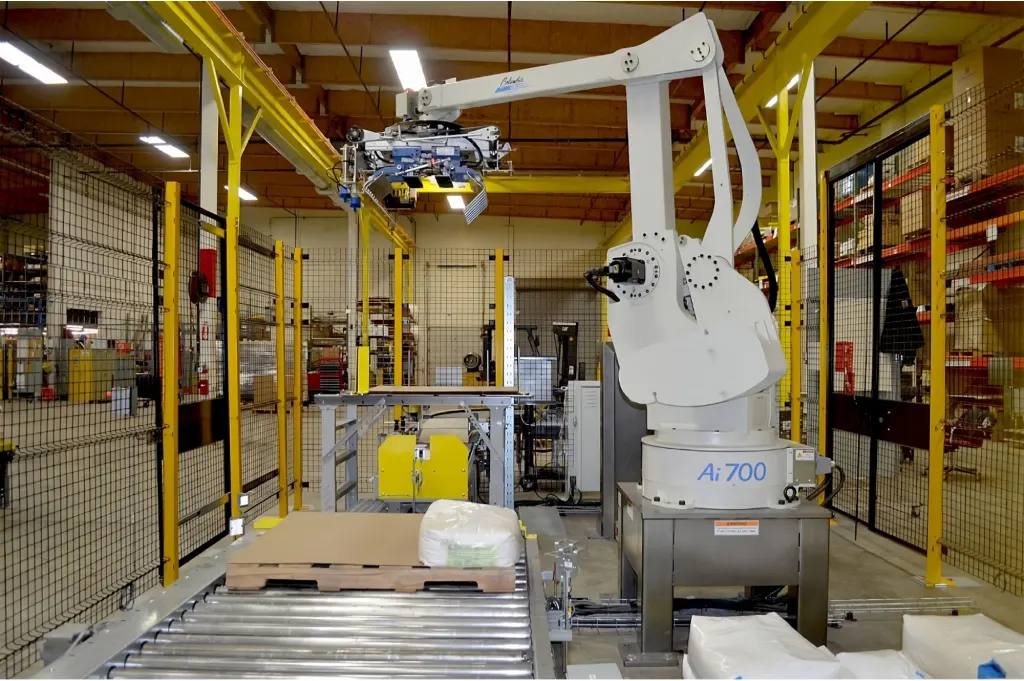
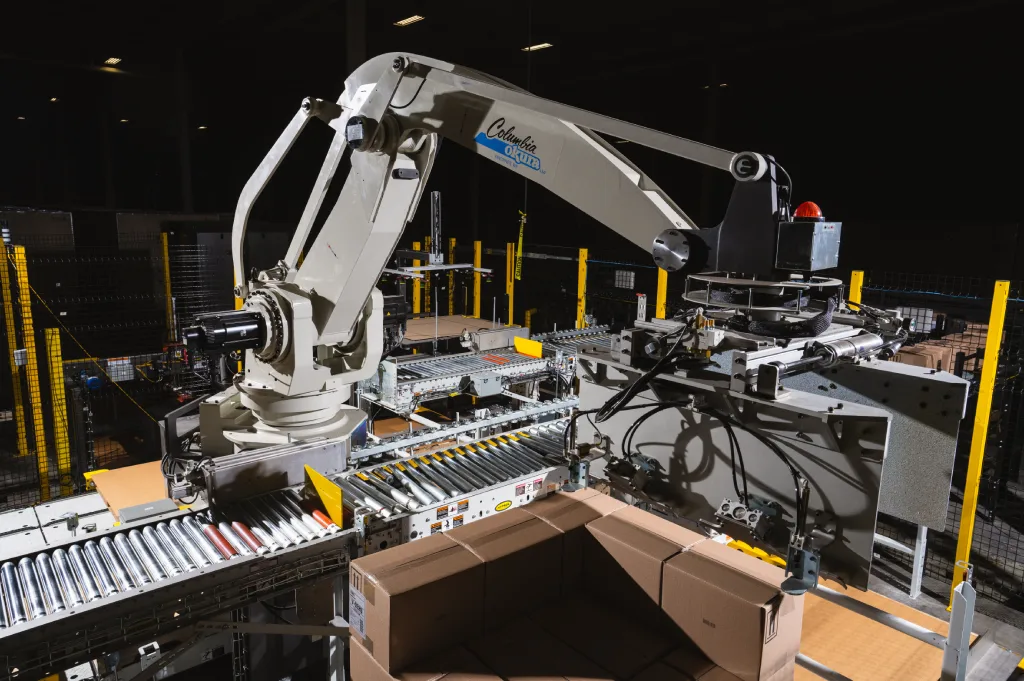
How Robotic Palletizers Improve Overall Productivity
Integrating palletizing robots provides diverse operational advantages:
- Consistent stacking quality and load stability, irrespective of shift or operator, reducing shipping inconsistencies and product damage.
- Higher throughput and predictable cycle times help to plan better and quicker shipping.
- Reduced manual labor and ergonomic pressure on workers, reducing workplace mishap risk and setting employees free for greater-value tasks.
- Adaptable to handle differing product sizes, shapes, and packaging formats, providing flexibility with changing product lines.
- Better use of floor space and streamlined warehouse flow: Since a single robotic cell can often replace multiple manual or semi-automated stations.
Combined, these developments cause faster operations, lower cost per pallet, and better use of resources, often providing considerable ROI with time.
Choosing the Right Robotic Palletizer Manufacturer
Choosing an appropriate robotic palletizer manufacturer is essential for long-term success. While measuring possible manufacturers, keep in mind:
- Their track record with your industry (food, automotive, e-commerce, etc.)
- Their capacity to offer tailored solutions, flexible tooling, and configuration for your product types.
- Integration support (conveyors, wrappers, warehouse management systems)
- After-sales support, maintenance, and team training.
- Flexibility to handle mixed SKUs and differing production volumes
Conclusion
Robotic palletizing no longer remains a futuristic luxury; it is an essential and practical solution for those industries striving for consistency, efficiency, and scalability. Whether you belong to the food and beverage industry, e-commerce, automotive, packaging, or consumer goods, a palletizing robot can streamline how you handle packaging and shipping. Businesses can majorly improve productivity, reduce costs, and prepare growth with an accurate robotic palletizer.
FAQs
1. Which industries benefit the most from robotic palletizing?
The food and beverage, medical device, automotive, packaging, logistics, retail, e-commerce, and consumer goods industries possess great benefits.
2. How does a palletizing robot improve productivity?
A palletizing robot automates repetitive stacking, ensures consistent stacking on pallets, enhances throughput, reduces errors, and removes manual labor, leading to swifter, more dependable operations.
3. Why should companies switch to robotic palletizing?
Companies often turn to robotic palletizing, as it reduces labor charges, enhances safety and consistency, handles mixed product, and helps run operations without a proportional increase in time or workforce.
4. How do I choose the right robotic palletizer manufacturer?
Choose a manufacturer with a good track record, experience in your industry, adaptable and tailored solutions, strong support and integration services, and good after-sales service and training.
5. Are palletizing robots suitable for small and medium-sized businesses?
Yes, many modern palletizing robots and solutions are modular, scalable, and flexible for smaller production volumes or mixed-product environments, making them credible even for SMEs.
6. What is the ROI timeline after installing a robotic palletizer?
Based on production volume, SKU mix, and operational functioning, many businesses recover their investment in a short timeframe, often within 1-3 years.
7. How should I contact you for a robotic palletizer?
You can get in touch via our website contact form, email, or phone to request a quote. We will discuss your workflow and product types and suggest an ideal palletizing solution.
8. Do you provide installations of robotic palletizers?
Yes, we do. Along with supplying machinery, we offer installation, integration, training, and support services to ensure seamless integration and improved performance.